




Exploring the Unique Puerto Plata Lagoon: Wildlife & Ecotourism Guide
Imagine floating across mirror-like waters surrounded by lush emerald mangrove channels, where exotic tropical birds sing above and gentle aquatic mammals glide below. The Puerto Plata Lagoon wildlife ecosystems offer travelers an extraordinary escape into the pristine natural heritage of Puerto Plata, Dominican Republic. Whether you are a nature enthusiast, an avid photographer, or a cruise traveler seeking an authentic adventure, exploring these coastal wetlands reveals a side of the island that few standard beach tourists ever see.
At POP Dominican Travel, led by expert local guides and curated under the leadership of Aneudy, we specialize in showing you the hidden ecological gems across the North Coast. From North American adventurers to Dominican-Yorks returning to connect with their native roots, discovering the vibrant ecosystems of Puerto Plata, Dominican Republic, creates memories that last a lifetime. Read on to master everything you need to know about navigating the local flora, fauna, and waterways.
Table of Contents
- Overview of Puerto Plata Lagoon Wildlife Ecosystems
- Avian Wonders: Bird Watching in Puerto Plata Lagoons
- Mammals, Reptiles, and Marine Life in Coastal Waters
- The Mangrove Forest Habitat & Eco-Tours
- Best Time to Visit & Travel Tips for Wildlife Photography
- Plan Your Ultimate Eco-Adventure with POP Dominican Travel
- Frequently Asked Questions
Overview of Puerto Plata Lagoon Wildlife Ecosystems
The coastal lagoons surrounding Puerto Plata, Dominican Republic, harbor one of the most biodiverse brackish ecosystems in the Caribbean region. These rich estuarine habitats support over 100 species of resident and migratory fauna, making them essential biological sanctuaries.
Positioned between the towering peaks of Mount Isabel de Torres in Puerto Plata, Dominican Republic, and the Atlantic Ocean, these protected estuaries create a shelter for delicate life. Estuarine wetlands like those in Cabarete, Dominican Republic, balance salinity levels where rivers meet the sea. This creates nutrient-rich nursery grounds for young fish, crustaceans, and coastal birds.
Visiting these wetlands provides an ideal balance to high-adrenaline adventures like the nearby Damajagua Waterfalls in Puerto Plata, Dominican Republic. Travelers arriving via the Amber Cove cruise terminal in Puerto Plata, Dominican Republic, or the Taino Bay port in Puerto Plata, Dominican Republic, can quickly access these quiet eco-sanctuaries within a short driving distance.
Avian Wonders: Bird Watching in Puerto Plata Lagoons
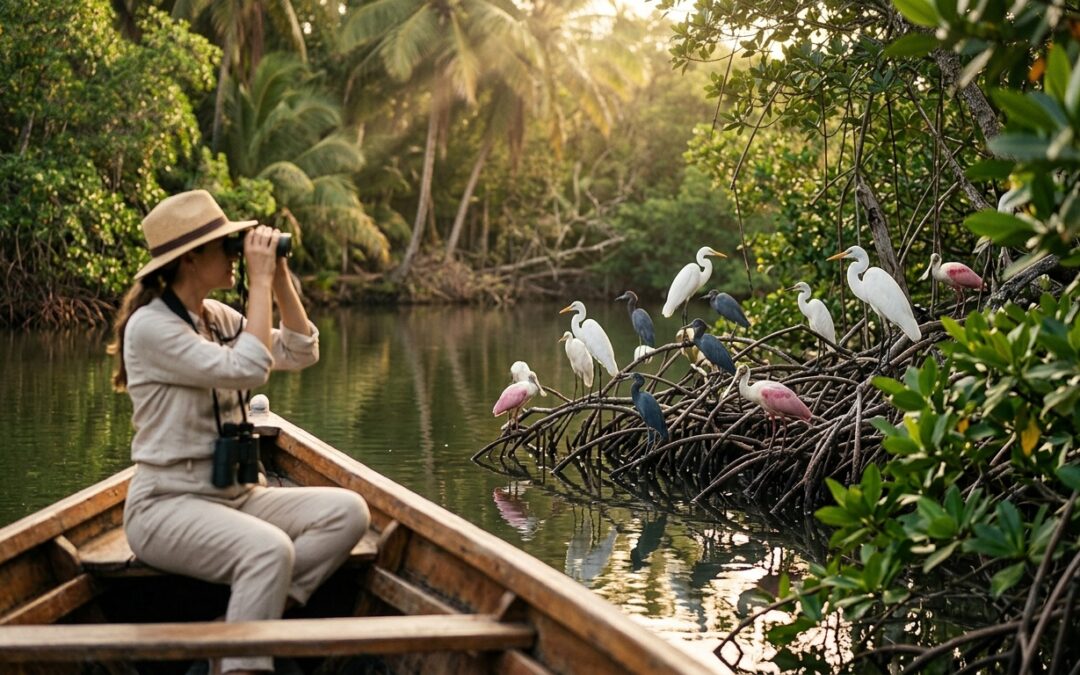
The avian population in the lagoons of Puerto Plata, Dominican Republic, includes over 80 documented native, endemic, and migratory bird species. Birdwatchers can easily spot rare species such as the Hispaniolan Woodpecker, Great Egret, and Roseate Spoonbill year-round.
Because these tranquil waters are heavily protected from urban noise, birds thrive along the forested banks. Beginners and professional ornithologists alike will find endless opportunities to expand their life lists while exploring with local naturalists who know how to identify calls in the thick canopy.
Endemic and Native Species to Spot
Endemic birds in Puerto Plata, Dominican Republic, are uniquely adapted to the island’s coastal wetland and subtropical climate. Visitors frequently encounter the Hispaniolan Palmchat, the national bird, alongside vibrant hummingbirds along the water’s edge.
Keep your binoculars ready for the Hispaniolan Trogon, with its bold red and green plumage, as well as the Hispaniolan Lizard-Cuckoo hiding among lower branches. Participating in dedicated bird watching in the Dominican Republic offers an unbeatable window into species found nowhere else on planet Earth.
Seasonal Migratory Visitors
Migratory birds arrive in the lagoons near Puerto Plata, Dominican Republic, between November and April to escape North American winters. Herons, warblers, and osprey thrive in these sheltered feeding grounds during these cooler dry months.
Flocks of blue-winged teal and snowy egrets skim across the calm lagoons during sunset. Detailed tracking data hosted on the official eBird wildlife database highlights these coastal regions as vital stopover grounds along the Atlantic Flyway.
Mammals, Reptiles, and Marine Life in Coastal Waters
The sheltered lagoons and estuarine reserves around Puerto Plata, Dominican Republic, serve as crucial nurseries for West Indian Manatees, sea turtles, and indigenous freshwater fish species. Protecting these calm waters ensures the survival of vulnerable marine wildlife across the northern coast.
Underneath the tranquil surface, complex food webs flourish. Microscopic plankton supports shoals of juvenile snapper, snook, and tarpon, which draw larger predators and specialized fishing birds into the shallow bays.
The Sanctuary of Estero Hondo Manatees
The West Indian Manatee finds sanctuary in the protected lagoon bays situated near Puerto Plata, Dominican Republic. Visitors taking guided boat tours can observe these gentle marine mammals grazing peacefully on shallow seagrass beds.
At the Estero Hondo Marine Sanctuary, located just west of Puerto Plata, Dominican Republic, elevated wooden observation decks allow guests to view manatees surfacing for air without disturbing their natural rhythms. It represents one of the most successful marine conservation areas managed in the Caribbean.
Native Reptiles and Freshwater Fauna
Reptiles in the coastal lagoons of Puerto Plata, Dominican Republic, consist primarily of non-dangerous native species, including green iguanas, tree frogs, and freshwater sliders. These creatures inhabit the rooted edges of the lagoon where vegetation is densest.
While relaxing on your boat tour, look closely at hanging tree roots to spot Hispaniolan green iguanas sunning themselves. You can also hear the rhythmic evening chorus of native coquí frogs echoing across the mangrove forest from late afternoon through dusk.
The Mangrove Forest Habitat & Eco-Tours
Red, black, white, and buttonwood mangroves dominate the perimeter of every lagoon in Puerto Plata, Dominican Republic, filtering water and providing critical shelter for wildlife. Kayaking and paddleboarding excursions offer the most sustainable, low-impact way to explore these delicate waterways.
Renting a silent paddle craft lets you glide effortlessly through narrow aquatic tunnels formed by intertwining branches. If you want to explore the region’s top coastal waters, check out our complete Cabarete Lagoon coastal guide to help plan your day on the water.
Guided eco-tours teach travelers how mangroves buffer coastal regions against tropical storms while sequestering substantial amounts of carbon. Booking a specialized mangrove tour guide ensures you navigate safely while learning about local environmental restoration projects supported by the GoDominicanRepublic official travel portal.
Best Time to Visit & Travel Tips for Wildlife Photography
Early morning between 6:30 AM and 9:00 AM offers the optimal window for viewing wildlife in the lagoons of Puerto Plata, Dominican Republic. During these cooler hours, animal activity peaks, and calm waters provide reflection-free conditions ideal for photography.
To capture stunning nature photos and enjoy a seamless excursion, keep the following practical travel tips in mind:
- Bring a Telephoto Lens: A 300mm lens or higher helps capture sharp photos of timid birds without disturbing their natural behaviors.
- Wear Reef-Safe Sunscreen: Protect fragile lagoon habitats by using eco-friendly, biodegradable sunblock and non-toxic insect repellent.
- Choose Quiet Transportation: Electric boats, kayaks, or wooden canoes produce zero noise, bringing you much closer to feeding wildlife.
- Book Authorized Guides: Local certified eco-guides know hidden roosting spots while ensuring full compliance with wildlife protection laws. Consult verified traveler ratings on the TripAdvisor travel community reviews before setting out.
If you are staying at luxury resorts along Playa Dorada in Puerto Plata, Dominican Republic, or Sosúa, Dominican Republic, morning transfers can easily be arranged straight from your hotel lobby.
Plan Your Ultimate Eco-Adventure with POP Dominican Travel
Exploring the pristine wildlife of the Puerto Plata Lagoon in Puerto Plata, Dominican Republic, delivers an unforgettable ecological experience far away from crowded tourist resorts. Partnering with professional local guides ensures safe, respectful, and deeply enriching interactions with nature.
At POP Dominican Travel, we take pride in organizing seamless, private, and customizable excursions tailored to your family’s personal preferences. Whether you are coming ashore for a few hours from Amber Cove in Puerto Plata, Dominican Republic, or spending a two-week vacation enjoying the North Coast, let our team handle every detail. Contact Aneudy and our expert travel advisors today to lock in your ultimate eco-tour!
Frequently Asked Questions
Where is the best place to see wildlife in the Puerto Plata Lagoon, Dominican Republic?
The best location is within Cabarete and Goleta National Park, located near Cabarete, Dominican Republic, just a short drive from central Puerto Plata, Dominican Republic. The protected mangrove channels host abundant birds, iguanas, and marine life.
Are there dangerous animals or crocodiles in Puerto Plata lagoons?
No, there are no dangerous crocodiles or venomous snakes inhabiting the coastal lagoons of Puerto Plata, Dominican Republic. The ecosystem is completely safe for guided kayaking, paddleboarding, and boat tours.
What should I wear for a lagoon wildlife tour in Puerto Plata, Dominican Republic?
Wear lightweight, breathable clothing, water shoes or sandals with straps, a wide-brimmed hat, and polarized sunglasses. Bringing a lightweight rain jacket is also recommended for sudden tropical showers.
Can cruise passengers from Amber Cove or Taino Bay visit the lagoons?
Yes, cruise passengers arriving at Amber Cove in Puerto Plata, Dominican Republic, or Taino Bay in Puerto Plata, Dominican Republic, can easily book shore excursions to explore the nearby coastal lagoons and return with plenty of time before ship departure.